About DPLab
The Developmental Psychopathology Lab was established in 2010 at the University of Cyprus by Prof. Kostas A. Fanti.
Our research examines how emotional, behavioural, biological and interpersonal processes interact across development, and how understanding these mechanisms can inform better prevention and intervention.
Department of Psychology ยท University of Cyprus

Early development
Why we study the early years
DPLab studies how emotional, behavioural and biological processes unfold from early childhood through adolescence, and how the people around a child shape the pathways that follow.
At a glance
We follow how difficulties emerge, persist or fade across development.
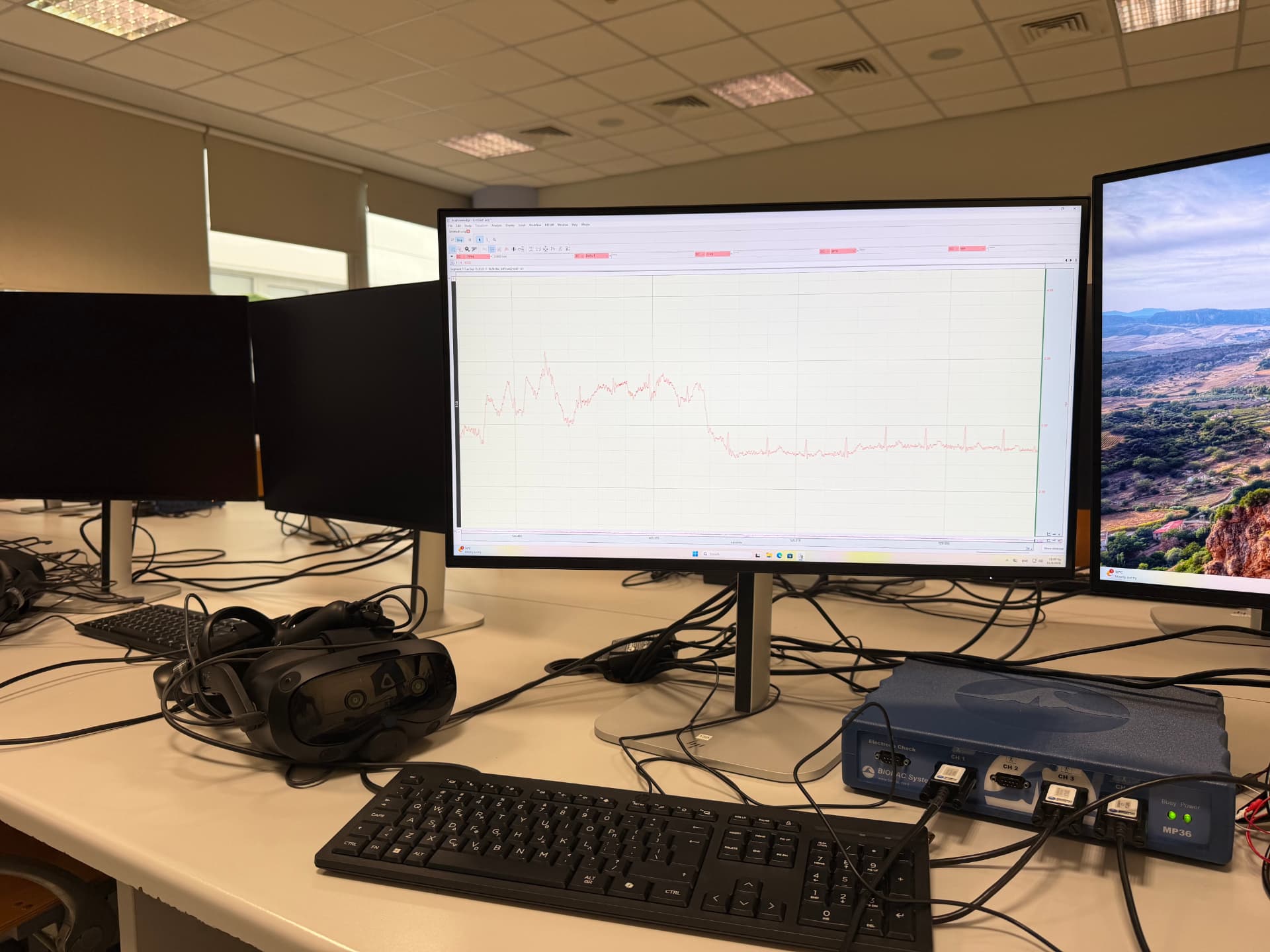
Heart rate, skin conductance and brain signals recorded alongside behaviour.
Parents, peers and young people studied together, not in isolation.
Latent profiles and clustering reveal distinct groups inside large cohorts.
Our story
2010
The lab is founded
Established at the University of Cyprus by Prof. Kostas A. Fanti.
2010s
Longitudinal cohorts
Large school based cohorts followed from childhood into adolescence.
Mid 2010s
Biology enters the design
Psychophysiology, fNIRS and eye tracking added to behavioural measures.
Recent years
Interaction and intervention
Dyadic research, biofeedback and transcranial magnetic stimulation.
Now
Immersive environments
Multi user virtual reality for studying and changing social processes.
Our evolution
2010
Initial focus on developmental psychopathology and understanding the emergence of behavioural and psychological difficulties.
risk โ mechanisms โ relationships โ intervention โ technology
DPLab approaches psychopathology as the outcome of interacting processes rather than a single cause.
Our research
We study how psychological difficulties emerge, persist and change from childhood through adolescence and adulthood.
A major research focus of DPLab is understanding aggression, conduct disorder, antisocial behaviour and their developmental pathways.
We investigate differences in empathy, emotional responsiveness, interpersonal sensitivity and behaviour among young people with differing developmental profiles.
We study how individuals experience, understand and regulate emotion, and how these processes relate to behavioural and psychological adjustment.
We examine how relationships with parents, peers and other social contexts shape development.
We use knowledge about developmental mechanisms to design and test increasingly targeted intervention approaches.
0
young people included in the Cyprus Longitudinal Cohort on Antisocial Behavior
0
schools represented
0+
countries involved through international research networks
DPLab has extensive experience conducting large-scale, multi-informant and longitudinal research, including repeated measurement of participants across several years. Figures describe research capacity across the cohort, not participation in every individual study.
Methods
SELF-REPORT
Questionnaires and validated psychological measures
BEHAVIOUR
Experimental tasks and behavioural paradigms
HEART
Heart rate and heart-rate variability
SKIN
Electrodermal activity / skin conductance
MUSCLE
Electromyography
RESPIRATION
Breathing-related physiological measures where used
BRAIN
fNIRS / functional near-infrared spectroscopy
ATTENTION
Eye tracking
FACE
Computer-assisted analysis of facial emotional expressions
Multimethod research
Combining different sources of information allows DPLab to study psychological processes beyond what participants can report themselves.
Current DPLab research increasingly examines how emotional, behavioural and physiological processes unfold between people, including parents, peers and young people.
Highlight
Interpersonal synchrony
How two or more people become coordinated across behaviour, emotion or physiological responses during interaction.
Innovation
DPLab increasingly uses immersive technology to create controlled environments in which emotion, behaviour and interpersonal processes can be studied, and eventually targeted through intervention.
The lab has developed significant capacity for multi-user VR and neurophysiological research.
DPLab's research programme has evolved from identifying risk factors toward understanding the mechanisms that shape developmental trajectories and testing ways those mechanisms may be changed.
Identify developmental patterns
Understand underlying mechanisms
Measure emotion, behaviour and physiology
Study relationships and context
Test targeted interventions
Evaluate change
Data
Advanced analysis is used to understand heterogeneity and developmental patterns across large, repeated and multimodal datasets.

Sample image ยท to be replaced with a DPLab photograph
11+ countries
DPLab researchers have participated in cross-national research networks, contributing to collaborative work across countries and research settings.

Sample portrait ยท to be replaced
Prof. Kostas A. Fanti
Founder & Director, Developmental Psychopathology Lab
Professor of Psychology
University of Cyprus
Prof. Fanti's research focuses on developmental psychopathology, conduct problems, antisocial behaviour and related emotional, biological and interpersonal processes.
That is the question at the centre of DPLab.